DIY Sensory Bag
Coping Skills and Sensory Bags for Anxiety, Trauma, and Neurodivergent Nervous Systems
If you have ever been told to “just take a deep breath” while your body is fully in panic, shutdown, or survival mode, you already know how disconnected that advice can feel.
A coping skills bag, sometimes called a sensory bag, is one of the most practical supports you can build for yourself. It is a small collection of tools that helps your nervous system settle when thinking clearly is not available.
At Collectively We Heal, we often recommend coping skills bags for people navigating PTSD, generalized anxiety, and neurodivergent nervous systems because they support regulation in a body-first, shame-free, and realistic way.
What Is a Coping Skills or Sensory Bag?
A coping skills bag is a small, portable set of grounding tools you can keep in a purse, backpack, desk drawer, or car console. It is designed for moments such as:
- anxiety spirals
- panic symptoms
- trauma triggers
- dissociation or feeling disconnected
- sensory overload or shutdown
These tools work through the senses including touch, temperature, scent, and sound so your body can register safety and return to the present moment.
Who Coping Skills Bags Can Help
Coping skills bags can be especially helpful for people living with:
- PTSD or complex trauma
- generalized anxiety or panic symptoms
- ADHD, autism, or sensory sensitivity
- burnout, chronic stress, or emotional flooding
Needing regulation support does not mean you are fragile. It means your nervous system has been carrying a lot.
What to Put in a Sensory Bag
Aim for four to six items to start. The goal is not a perfect kit. It is a kit you will actually reach for.
Touch and tactile grounding
- a fidget such as putty, a popper, spinner, or marble maze
- a smooth stone or worry stone
- a comforting texture like a fabric square or soft keychain
Temperature support
- an instant cold pack which can help during panic or overwhelm
- hand warmers which can help with shutdown or numbness
Scent, if soothing for you
- an essential oil roller or scented balm
- a familiar scent such as tea, lotion, or chapstick
Sound
- noise-reducing earplugs
- a saved grounding or white noise audio track
Orientation tools
- a small grounding card such as 5-4-3-2-1 steps
- a photo that signals safety or steadiness
- a short phrase that feels believable on hard days
If a tool does not help, you are not doing anything wrong. Your body is giving you information. Swap it out.
Cost Breakdown for a CWH Sensory Bag
Below is a realistic estimate for building a coping skills bag you could offer through your site, assembled by Collectively We Heal.
| Item | Estimated cost |
|---|---|
| Fidget or tactile tool | $3 to $10 |
| Worry stone or grounding object | $3 to $6 |
| Essential oil roller or scented balm | $8 to $12 |
| Instant cold pack or hand warmer | $2 to $4 |
| Printed grounding card | $1 to $2 |
| Canvas pouch or zip bag | $6 to $10 |
Estimated cost per bag ranges from $25 to $40. A suggested retail price would fall between $45 and $65 depending on packaging and labor.
You may also choose to offer a smaller mini kit with two or three items at a lower price point.
Ready-Made Sensory Bags and Coping Kits on Etsy
If building a coping skills bag feels like too much right now, there are thoughtfully made sensory kits available online. The links below lead to example listings on Etsy.
- Safe place or pocket sensory bags
- ADHD sensory calm kits
- Portable anxiety and grounding kits
- Panic pouch and instant calm kits
Disclosure: Collectively We Heal does not have financial affiliations with Etsy sellers and does not receive compensation from these links. They are shared for educational and accessibility purposes only.
How to Use a Coping Skills Bag
- Practice using the tools once when you are calm
- Reach for the bag early when you notice signs of escalation
- Let your body choose what feels supportive in the moment
- Rotate items as your needs change
This is not about calming down perfectly. It is about giving your nervous system a way back.
A Gentle Reminder
A sensory bag can be a meaningful support, but it is not a replacement for therapy. If trauma symptoms or anxiety are impacting your life, working with a trauma-informed clinician can help you build deeper and more sustainable regulation.
At Collectively We Heal, we believe healing is a radical act of courage and everyone deserves tools that help them feel safe, seen, and whole.
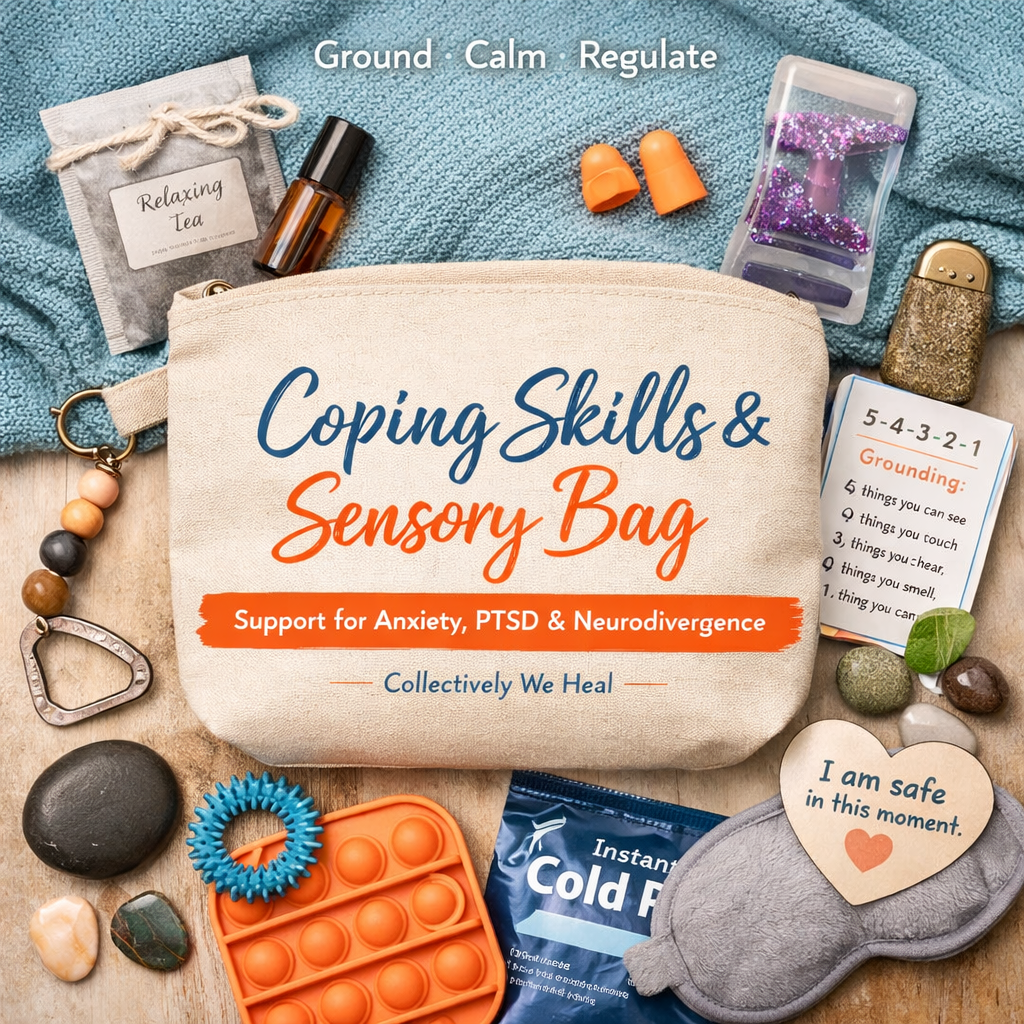
DIY Sensory Bag
You can create the items yourself and compliment with natural, organic, and small business made sensory tools.